
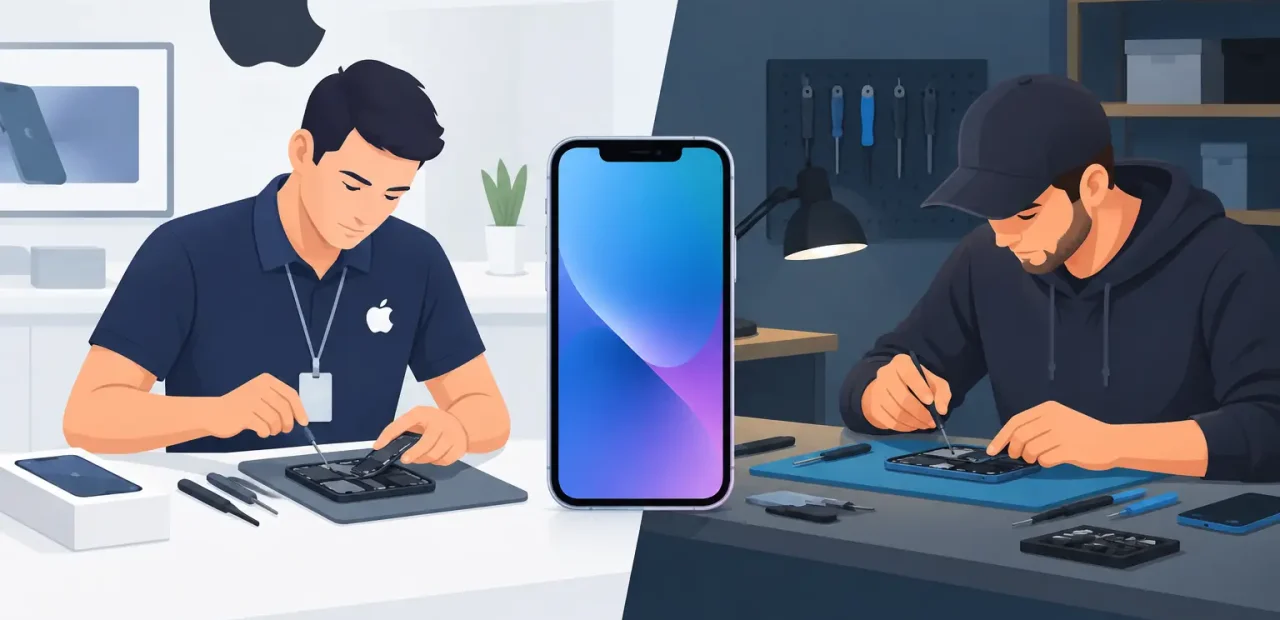
A cracked screen before class, a battery that dies by lunchtime, or a charging port that quits when you need directions creates the same question: where should you take your iPhone? Authorized versus independent iPhone repair is not simply a choice between official and local. It is a choice about turnaround time, cost, parts, warranty coverage, and what matters most for your specific phone.
For some repairs, an Apple-authorized location is the right call. For many common out-of-warranty problems, a skilled independent repair shop can be the faster, more affordable answer. Here is how to make the decision without guessing.
Authorized Versus Independent iPhone Repair: The Main Difference
An authorized repair provider performs service under Apple’s systems, processes, and parts programs. These locations generally use Apple Genuine Parts and follow Apple’s repair procedures. If your iPhone is covered by Apple’s limited warranty or AppleCare+, an authorized provider can be especially useful because eligible service may be covered or carry a lower fee.
An independent iPhone repair shop operates outside that authorized network. That does not mean the repair is careless or low quality. A reputable independent shop specializes in diagnosing everyday iPhone problems and offering clear options, often with much faster availability. The quality of the experience depends heavily on the shop’s technicians, parts standards, testing process, and warranty.
The practical difference usually shows up at the counter. Authorized service may involve device intake, coverage verification, diagnostics, and a scheduled or mail-in process. An independent shop can often inspect the phone immediately, explain the issue in plain language, and complete a common repair while you wait.
When Authorized Repair Makes Sense
Authorized service is a strong option when your iPhone is still protected by Apple’s warranty or AppleCare+. A covered manufacturing issue, a battery service that qualifies under your plan, or a problem that may require an Apple system-level repair can be worth handling through an authorized provider.
It can also make sense if having Apple Genuine Parts documented in the device’s service history is your top priority. Newer iPhones can display parts and service information in Settings, and Apple’s repair process is designed to pair certain components correctly with the phone. That may matter to owners who plan to keep the device for years or sell it later and want an entirely Apple-documented repair record.
There are trade-offs. Authorized repair pricing can be higher when there is no coverage, and same-day availability depends on the location, appointment schedule, and part availability. In some cases, the service process may result in a replacement device rather than a repair to the exact phone you brought in. That can be fine, but it is worth asking before you hand it over.
Why Many People Choose an Independent Shop
Independent repair is often built around the urgent situations Apple users know well. Your screen breaks on the way to work. Your battery starts shutting down during a busy week. Your charging cable only works at one exact angle. You do not necessarily need a long service process. You need your phone back.
A good local shop can provide a faster path for common issues, including screen damage, back glass damage, worn batteries, charging port problems, camera trouble, button failures, and audio issues. For a customer near TCU, getting a straightforward screen repair completed in about 15 minutes can be far more useful than waiting days for an appointment.
Price is another major factor. Independent shops often have lower overhead and can offer repair choices that fit an older phone’s value. If you have an iPhone that is paid off and otherwise working well, spending a reasonable amount on a quality repair may make more sense than replacing the whole device.
Convenience should not mean cutting corners. Look for a shop that explains what part will be used, gives a clear quote before work begins, tests the device after repair, and stands behind the service. A repair you can watch at the front counter adds another layer of confidence because the process is straightforward, not hidden behind a vague promise.
Parts Quality Matters More Than the Label
The word “part” can cover a wide range of quality. That is why comparing only the lowest advertised price is risky. A bargain screen may look acceptable on day one but have poor brightness, weak touch response, inaccurate color, or a shorter lifespan. A low-quality battery can lead to frustrating performance and inconsistent capacity.
Apple Genuine Parts are designed for Apple’s specifications and are the standard route through authorized service. Independent shops may offer high-quality aftermarket parts, reclaimed original components where appropriate, or other options based on the model and repair. The right choice depends on your budget, your iPhone’s age, and how you use the device every day.
Ask direct questions. Is the screen high quality? Will Face ID, cameras, speakers, buttons, and charging be tested before you leave? Does the shop provide a repair warranty? A trustworthy technician should answer clearly, without pressuring you into a repair you do not need.
What About Your Apple Warranty?
This is where the details matter. An independent repair does not automatically erase every form of Apple coverage on the entire phone. However, Apple may decline warranty service for damage or a later issue that is related to a non-Apple repair or non-genuine component. If your phone is still under Apple’s limited warranty or AppleCare+, check your coverage and compare the authorized service cost first.
If the phone is out of coverage, the decision changes. You are no longer choosing between a covered repair and an independent repair. You are comparing value, quality, timing, and the condition of the phone. For many people, a fast repair from a reputable local specialist is the practical choice.
Older models deserve a realistic conversation, too. A battery replacement can give an older iPhone a useful second life. A screen repair may be sensible if the phone still meets your needs. But if the device has several unrelated issues and its resale value is low, putting more money into it may not be the best move. A good shop should tell you that honestly.
Questions to Ask Before You Approve Any Repair
You do not need to become an iPhone expert before choosing a repair provider. You just need answers to a few practical questions: What exactly is wrong with my phone? What will the repair cost before tax or additional fees? What type of part will be used? How long will it take? What warranty comes with the repair?
Also ask whether the shop will test key functions after the work is complete. A screen replacement should involve more than turning the phone on. The technician should check touch response, display quality, cameras, speakers, microphones, charging, buttons, and relevant security features. Testing is what separates a quick-looking fix from a repair you can rely on.
Back up your iPhone before any service whenever possible. Repairs commonly preserve your data, but a backup protects your photos, messages, school files, and work information if an unexpected issue occurs. Remove your case, know your passcode if testing requires it, and turn off Find My iPhone when instructed by the provider.
Choose Based on Your Phone and Your Day
There is no single winner in authorized versus independent iPhone repair. Authorized service can be the best fit for covered devices, Apple-specific service needs, and customers who want an Apple-managed repair path. Independent service can be the better fit when time matters, the phone is out of coverage, and you want a clear, affordable repair without a long delay.
The best repair choice should leave you with a phone that works properly and a bill you understand. If a damaged iPhone is interrupting school, work, rides, payments, or family plans, choose a technician who can explain the options clearly and get you back to your day with confidence.