
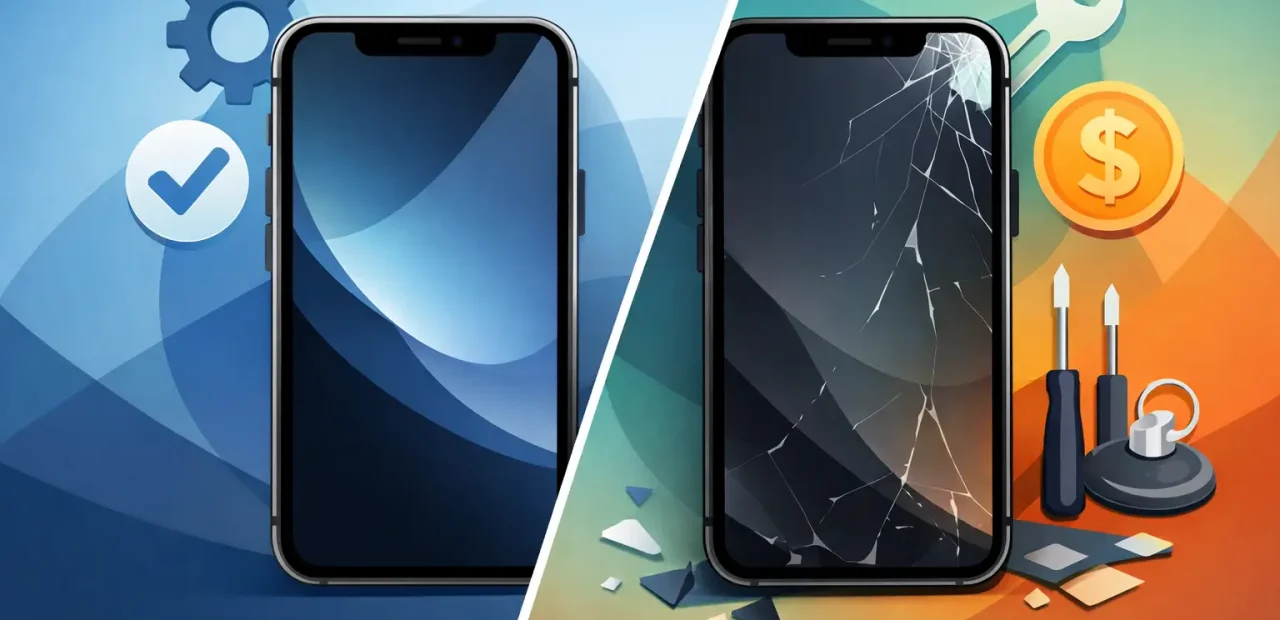
A cracked iPhone screen creates one immediate question: how quickly can it be fixed, and what will the replacement feel like afterward? When comparing OEM versus aftermarket screens, the best answer is not always the most expensive one. It depends on your iPhone model, how you use it, your budget, and the quality of the specific replacement part.
For most people, the goal is simple: get a clear, responsive screen back without paying more than the phone is worth. A good repair shop should explain your options plainly, not push one part type without telling you the trade-offs.
What OEM Screens Mean
OEM means Original Equipment Manufacturer. In plain terms, an OEM screen is made by, or originally supplied for, the company that built the phone. For iPhones, this can describe a genuine original screen removed from another device, a refurbished original display, or an original-spec replacement sourced through an approved parts channel.
The main appeal is familiarity. An OEM display is designed to match the iPhone’s original screen in color, brightness, touch response, viewing angles, and overall fit. On OLED iPhones, an original-quality OLED screen can also preserve the deep blacks and contrast people expect from their device.
That does not mean every part labeled OEM is automatically identical. The term can be used loosely in the repair market. A screen may have an original display panel with refurbished glass, or it may be described as OEM-quality rather than truly original. That is why asking what type of screen is being installed matters more than relying on a label alone.
OEM options are often a strong fit for newer iPhones, phones in excellent condition, and customers who care most about preserving the original display experience. They also make sense when color accuracy, outdoor brightness, or a premium OLED appearance matters for work, photography, school, or daily use.
What Aftermarket Screens Mean
Aftermarket screens are made by third-party manufacturers rather than the original phone maker. They are built to fit specific iPhone models and restore core functions such as display, touch input, and front glass protection.
The aftermarket category is broad. There are low-cost replacement screens, high-quality premium screens, LCD options for certain OLED models, and better aftermarket OLED panels. Treating all aftermarket parts as the same leads to confusion. Quality varies substantially between suppliers and screen types.
A quality aftermarket screen can be an excellent repair choice, especially on an older iPhone or when keeping the repair affordable is the priority. Many customers simply need their screen to look good, respond quickly, and get them back to calls, messages, maps, classwork, and work apps. A properly selected aftermarket display can do that very well.
The downside is that some aftermarket screens may differ from the original in brightness, color warmth, battery use, display thickness, or touch feel. Lower-grade screens are more likely to show those differences. A professional repair should use a part that matches the device and the customer’s expectations, rather than choosing the cheapest available screen.
OEM Versus Aftermarket Screens: The Differences That Matter
The most noticeable difference is usually display quality. OEM and high-grade OEM-equivalent displays tend to look closer to the original screen. Colors can appear more natural, brightness may be stronger outdoors, and touch response may feel more consistent. This is particularly relevant on iPhones originally equipped with OLED displays.
Aftermarket screens can still look sharp and work reliably, but quality depends on the part. An LCD replacement on an iPhone that originally had OLED technology may not provide the same deep contrast or rich black tones. It can be a practical cost-saving choice, but it should never be presented as identical to the original display.
Price is the other major difference. OEM parts generally cost more because supply is limited and the parts are closer to the original specification. Aftermarket options give customers more flexibility, often lowering the total repair cost. For a phone that is a few years old, an affordable high-quality aftermarket screen may be the smarter financial decision.
Durability is not determined by OEM versus aftermarket alone. Original screens can crack again after a hard drop, and quality aftermarket screens can hold up well with normal use. The quality of installation matters just as much. A screen must be seated correctly, connected carefully, and tested before the phone goes back in your hands.
Features and iPhone Model Matter
Your iPhone model affects the decision more than most people realize. Older iPhones with LCD displays usually have straightforward replacement options. On newer models, display technology and paired components can make the repair more specific.
Features such as True Tone, automatic brightness behavior, and the proximity sensor assembly may require careful handling during a screen repair. A skilled technician tests the display, touch function, earpiece area, sensors, and front camera operation before returning the phone. Depending on the model, its repair history, and the part installed, iOS may also show a display-related notification in Settings. That message does not automatically mean the screen cannot work properly, but it is worth discussing before the repair begins.
If maintaining the closest possible original experience is your top priority, ask about an OEM or premium OLED option. If you need a dependable screen at a lower price, ask which high-quality aftermarket choice is available for your exact iPhone.
How to Choose the Right Screen for Your Budget
Start with the condition and value of your phone. Putting the highest-cost screen into an older iPhone may not make sense if the battery is weak or the device is otherwise near the end of its useful life. In that situation, a quality aftermarket screen can restore the phone without turning a repair into a replacement-level expense.
Next, think about what you notice when using a screen. If you edit photos, watch video often, spend time outside, or are sensitive to display color and brightness, an OEM-style option may be worth the extra cost. If your priority is clear visibility, responsive touch, and a fast repair that keeps your daily routine moving, aftermarket can be a smart choice.
Also consider who is using the phone. A college student trying to keep costs down, a parent replacing a screen on a backup iPhone, and a professional who depends on a newer model all may make different choices. There is no single part type that wins every time.
Questions to Ask Before Approving a Screen Repair
A trustworthy shop should answer a few direct questions without making the process complicated. Ask whether the replacement is OEM, refurbished original, premium aftermarket OLED, or aftermarket LCD. Ask how the screen will compare with the original in brightness and color. Ask whether the repair includes testing and whether the shop stands behind its work.
It is also reasonable to ask for the total price before work begins. The right repair should not come with surprise add-ons after your iPhone is already opened. Clear pricing and clear part descriptions help you choose with confidence.
At Fort Worth iPhone Repairs, the focus is on helping you make that decision quickly and clearly. If you are near TCU with a cracked screen, a technician can look at your exact model, explain the available part options, and complete many screen repairs while you wait.
A screen repair should feel like a solution, not another problem to research for days. Bring in your iPhone, ask what part best fits your needs, and choose the option that gives you reliable everyday use at a price you are comfortable paying.